Website Tracking

Showing posts with label sustainable living. Show all posts

Wednesday, October 21, 2026

Sustainable Living, Sustainable Body: Eco Habits


Discover simple eco-friendly habits that reduce waste, support everyday wellness, and help you build a healthier, more sustainable lifestyle.  organic cotton mesh produce bag, sustainable living, eco-friendly habits, sustainable body, healthier life, sustainable lifestyle, green living, eco-friendly living, healthy lifestyle tips, sustainable habits, environmental awareness, zero waste living, reduce plastic waste, plastic-free lifestyle, reusable shopping bags, organic cotton bags, eco-friendly products, environmentally friendly habits, healthy living tips, sustainable health, green lifestyle tips, everyday sustainability, sustainable choices, reduce household waste, plastic-free shopping, mindful consumption, plant-based eating, outdoor exercise benefits, energy conservation, water conservation, sustainable wellness, natural healthy living, how to live sustainably, simple eco-friendly habits, sustainable living for beginners, protect the planet,  #EcoFriendlyHabits, #HealthyLifestyle, #LifeWithoutPlastic, #SustainableLiving, #EcoFriendly, #HealthyHabits, #GreenLifestyle, #SustainableBody, #EcoConscious, #ZeroWaste , #MindfulLiving, #PlanetFriendly, #HealthyChoices, #EcoWarrior, #SustainableWellness, #NatureLovers, #ConsciousConsumer , #GreenChoices, #LiveSustainably, #EcoLifestyle, #WellnessJourney, #SustainableHealth, #EcoAwareness,

Listen on Spotify

The Morning I Realized My Grocery Bags Were Also a Health Decision

A friend of mine, I'll call her Teresa, texted me a photo last year of her kitchen counter: a pile of plastic produce bags, a crumpled receipt, and a half-eaten granola bar wrapped in plastic. "I'm trying to be healthier," she wrote, "but I feel like everything I touch is plastic." I laughed, because I'd had the exact same realization years earlier standing in my own kitchen.

Here's what surprised me most once I started paying attention: the choices that protect the planet and the choices that protect my own body kept turning out to be the same choices.

That's not just a feel-good coincidence. A 2025 study published in the Journal of Hazardous Materials detected microplastic particles in human joint fluid samples, a finding researchers describe as an early signal that everyday plastic exposure may act as an additional stressor on the body. Meanwhile, Harvard researchers reviewing plant-based eating patterns have found consistent links to lower rates of heart disease, one of the most common outcomes of the standard Western diet, which also happens to carry a heavier environmental footprint.

If you're an eco-conscious reader who's passionate about reducing plastic and living sustainably, this post is for you. Discover why sustainable living and personal health are more connected than most people realize, learn the specific eco-friendly habits that benefit both your body and the planet, and find out how small, everyday swaps add up to a genuinely healthier life. Let's dig in together.

The Problem: We Treat Sustainability and Health as Two Separate Goals

Most people approach "going green" and "getting healthy" as two unrelated New Year's resolutions. One lives in the recycling bin. The other lives in the gym bag. Rarely do they share a plan.

That separation costs us. When sustainability and health are treated as competing priorities, both tend to lose. People skip the reusable produce bags because they're "trying to focus on diet" this month. Or they buy processed "diet" foods wrapped in excess plastic because convenience wins over everything else.

But the research increasingly points the other way. A genuinely sustainable lifestyle, one built around reducing plastic, eating more plants, moving outdoors, and conserving resources, tends to support better physical and mental health outcomes too. The habits aren't competing. They're the same habits, viewed from two different angles.

I think of it like currency that works in two places at once. Every swap you make for the planet tends to pay a dividend for your own body, and vice versa.

Have you ever noticed your healthiest habits and your most eco-friendly ones overlapping? I'd love to hear an example from your own life in the comments.

The Pain Points: Why "Sustainable" and "Healthy" Feel Hard to Combine

If you've tried to build both sustainable and healthy habits at once, you've probably run into some predictable friction. Here's what I hear most often from fellow eco-conscious readers:

  • Convenience wins when you're busy. Plastic-wrapped, processed food is faster than cooking a plant-based eating meal from scratch.
  • Sustainable products can feel like an extra expense. Reusable bags, bulk bins, and quality produce sometimes cost more upfront, even though they save money over time.
  • It's hard to know where to start. Between plastic reduction, diet changes, energy use, and water conservation, the sheer number of fronts feels overwhelming.
  • Outdoor time gets crowded out by screen time. Even people who value nature end up defaulting to indoor workouts and convenience.
  • Old habits are sticky. Years of grabbing plastic produce bags or driving short distances are hard to unlearn overnight.
  • It can feel like your individual choices don't matter against a global problem. That mindset, while understandable, often stops people before they start.

Recognize a few of these? You're not failing at sustainability or health. You're running into the same friction almost everyone does, and the good news is that a combined approach actually reduces that friction rather than doubling it.

The Solution: Building Eco-Friendly Habits That Support Your Body Too

Here's the framework I share with friends like Teresa. Four connected habit areas, each one supporting both environmental awareness and personal health at the same time.

Habit 1: Reduce Plastic in Your Kitchen, Starting With Produce

Your kitchen is one of the biggest sources of daily plastic waste, and it's also where your healthiest eating habits begin.

  • Swap plastic produce bags for an organic cotton mesh produce bag, which you can reuse for years instead of throwing away after one grocery trip.
  • Choose bulk bins for grains, nuts, and legumes when your store offers them.
  • Store leftovers in reusable glass containers instead of single-use plastic wrap.
  • Carry reusable shopping bags in your car or by your door so you never forget them.

Ready to cut plastic from your next grocery run? Click HERE to shop our organic cotton mesh produce bags and make plastic-free shopping effortless.

Habit 2: Lean Into Plant-Based Eating, Even Partially

You don't need to go fully vegan to see benefits, for your body or the planet.

  • Add one or two plant-based eating meals per week if you're not ready for a full switch.
  • Build meals around beans, lentils, and vegetables, which generally require far fewer resources to produce than animal products.
  • Choose seasonal, local produce when possible to reduce transportation-related emissions.

Harvard's nutrition researchers note that plant-forward eating patterns are consistently associated with lower cardiovascular risk, one of the leading causes of death tied to the standard Western diet. That's a direct line between a planet-friendly plate and a healthier heart.

Habit 3: Get Outside, On Purpose

Outdoor exercise benefits go beyond burning calories.

  • Trade one indoor workout a week for a walk, hike, or bike ride outside.
  • Combine movement with errands when possible, walking or biking instead of driving short distances.
  • Spend time in green spaces even without formal exercise. Simply being outdoors supports measurable wellbeing.

Researchers at the University of Exeter have studied what's sometimes called "green exercise," physical activity performed in natural outdoor settings, and found it associated with improved mood and reduced stress compared to the same activity performed indoors. Harvard's School of Public Health has similarly reported that time spent in nature is linked to both physical and mental wellbeing benefits.

Habit 4: Conserve Energy and Water at Home

Energy conservation and water conservation habits reduce both your footprint and your bills, freeing up resources for the things that matter most to you.

  • Switch to LED lighting and unplug devices not in use.
  • Fix leaky faucets promptly. A small, steady drip wastes more water than most people realize over a year.
  • Take shorter showers and install a low-flow showerhead.
  • Air-dry laundry when weather and schedule allow.

Which of these four habit areas feels most doable for you to start this week? Tell me below and I'll help you build from there.

Watch this video: Sustainable Living: 7 Eco-Friendly Habits for a Healthier Life!


Real Stories: Eco-Conscious People Building Healthier Lives

I've adapted these stories from people in my own community, with names changed for privacy.

Teresa, 34, marketing professional: Once Teresa swapped her plastic produce bags for reusable mesh ones and added two plant-based dinners a week, she noticed both a smaller grocery footprint and more consistent energy throughout her day.

Darnell, 41, father of two: Trying to model sustainable habits for his kids, Darnell started weekend family bike rides instead of driving to the park. His kids now ask for "outside time" before screen time.

Yuki, 29, apartment dweller with limited space: Without a yard for composting, Yuki focused on plastic reduction and bulk shopping instead, proving sustainable living doesn't require a large home.

The Fontaine family, suburban household of five: Switching to reusable produce bags, a low-flow showerhead, and one meatless dinner night cut their household waste noticeably within a few months, without feeling like a sacrifice.

Omar, 52, recovering from a sedentary lifestyle: Omar's doctor recommended more movement. Choosing outdoor walks over a treadmill gave him both the exercise and the mental lift he'd been missing.

Priya, 38, budget-conscious shopper: Priya assumed sustainable living meant spending more. Bulk bins, reusable bags, and home-cooked plant-based meals actually lowered her monthly grocery bill.

Have you found that a sustainable swap ended up benefiting your health or your budget in a way you didn't expect? I'd love to hear your story in the comments.

The Turning Point: When Sustainability Stops Feeling Like Sacrifice

Here's the moment this clicks for most people. Sustainable living isn't a list of things you give up. It's a set of habits that tend to give you something back, cleaner food, more movement, fewer unnecessary chemicals in your daily environment, and often, more money in your pocket.

This reframe matters because sacrifice-based motivation rarely lasts. Habits built around what you gain, a sharper mind after a walk outside, a lighter grocery bill from bulk shopping, a lower plastic footprint from one simple produce bag swap, tend to stick because they're reinforced every single day, not just by abstract environmental guilt.

I've watched friends like Teresa and Darnell shift from viewing sustainability as a chore to experiencing it as something that genuinely improves how they feel. That shift is the real unlock. Once eco-friendly habits start paying you back in energy, mood, and savings, they stop needing willpower to maintain.

Key Takeaways: Sustainable Living, Sustainable Body, Summarized

  • Sustainable habits and health habits overlap far more than most people realize, reducing plastic, eating more plants, and moving outdoors all show benefits for both the planet and the body.
  • Emerging research links everyday plastic exposure to inflammatory pathways, making plastic reduction a reasonable, low-risk health choice too.
  • Plant-forward eating is consistently associated with lower cardiovascular risk, according to Harvard nutrition researchers.
  • Outdoor exercise, or "green exercise," shows added mood and stress-reduction benefits compared to the same activity done indoors.
  • Energy and water conservation habits reduce your footprint and your household bills at the same time.
  • Reframing sustainability around what you gain, rather than what you sacrifice, makes the habits far easier to sustain long term.

Take Action: Start Building Your Sustainable, Healthier Life Today

You don't need to overhaul your entire lifestyle this week. Pick one habit area, plastic reduction, plant-based eating, outdoor movement, or resource conservation, and commit to one small, consistent change.

This week, try this: swap your plastic produce bags for reusable ones on your next grocery trip, and take one walk outside instead of inside. Notice how both choices feel, for your footprint and for your body.

Then come back and tell me how it goes. Share which habit you're starting with in the comments, ask questions if you're not sure where to begin, and share this post with a friend who cares about the planet and their own wellbeing just as much as you do.

This post is for general education and isn't a substitute for personalized medical or nutritional advice. Please talk with your doctor or a registered dietitian before making major changes to your diet or exercise routine.

Ready to make your next grocery trip plastic-free? Click HERE to shop our organic cotton mesh produce bags today.

Frequently Asked Questions About Sustainable Living and Healthier Living

Q1. Does reducing plastic use actually make a measurable difference to my health?

Emerging research has found microplastics in human joint fluid and identified pathways they may activate related to inflammation. The evidence is still developing, but reducing unnecessary plastic exposure is a reasonable, low-risk choice.

Q2. Do I need to go fully vegan to get the health benefits of plant-based eating?

No. Research consistently shows benefits associated with plant-forward eating patterns generally, so even partial changes, like one or two meatless meals a week, can support better outcomes.

Q3. What's the easiest sustainable habit to start with?

 Swapping plastic produce bags for reusable ones is one of the simplest changes, requiring no lifestyle overhaul and delivering an immediate reduction in household plastic waste.

Q4. Is outdoor exercise really better than indoor exercise?

Research on "green exercise" suggests added mood and stress-reduction benefits from exercising outdoors compared to the same activity indoors, though both offer genuine physical health benefits.

Q5. How can I live more sustainably without spending more money?

Bulk shopping, reusable bags and containers, home-cooked plant-based meals, and simple energy and water conservation habits often save money over time rather than costing more.

Q6. What's the connection between household waste reduction and personal health?

Reducing household waste often goes hand in hand with reducing processed, over-packaged foods, which tends to support both a smaller environmental footprint and a more whole-foods-based diet.

Q7. How do I stay motivated with sustainable habits long term?

Focus on what you gain, energy, mood, savings, rather than what you're giving up. Habits reinforced by immediate personal benefit tend to last longer than those driven by guilt alone.

Q8. Can small individual changes really make a difference environmentally?

Individual habits add up, especially when they influence household patterns and inspire others. Reusable products, reduced food waste, and conscious consumption all contribute meaningfully over time.

Which eco-friendly habit are you going to focus on this week, for your body or for the planet? Let me know in the comments, and share this post with a friend who's ready to build a healthier, more sustainable life too.


Click HERE to find reusable mesh bags and practical tools to reduce plastic in your routine


Thursday, September 10, 2026

Build a Sustainable Health Routine for Plastic-Free, Pain-Free Days


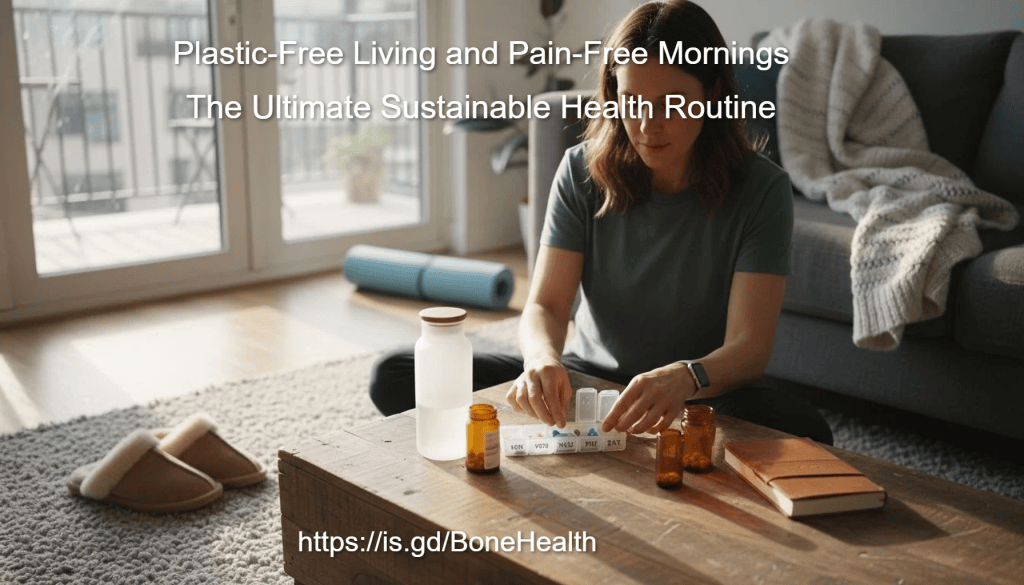
 Plastic-free living and pain-free mornings — a sustainable health routine for adults over 40

Listen on Spotify


Ease Morning Stiffness—Discover a Plastic‑Free Path to Strong, Flexible Joints


Wake Up Stiff and Surrounded by Plastic? Here's a Better Morning


A patient of mine, I'll call her Susan, came into my office last spring holding her travel mug in one hand and rubbing her knee with the other. "Doc, I creak louder than my kitchen floor," she said, laughing but not really joking. Every morning looked the same: stiff knees, an achy hip, and a kitchen counter covered in plastic-wrapped everything, from her produce bags to her coffee pods.


I told her something that surprised her: those two frustrations, her joints and her plastic clutter, might be more connected than she thought.

Here's a fact that stops most patients cold.


Emerging research has detected microplastic particles directly inside human joint fluid, and a 2025 study published in the Journal of Hazardous Materials found polystyrene microplastics in the synovial fluid of five out of twenty-one rheumatoid arthritis patients tested.


That's not proof plastic causes joint pain, but it's exactly the kind of early signal that makes an orthopaedic doctor pay attention.


If you're 40 or older, dealing with morning stiffness, and also trying to build a more sustainable health routine, this post is for you.


Discover the surprising link researchers are exploring between plastic exposure and joint inflammation, learn a simple morning mobility routine that fights stiffness at the source, and find out how small eco-friendly lifestyle swaps can support both your joints and the planet.


Let's get moving.


The Problem: Two Frustrations That Turn Out to Be Related


Most mornings start the same way for people over 40. You wake up, your joints feel tight, and you reach for a plastic-wrapped breakfast bar or a produce bag on your way to the grocery store later that day. Two separate frustrations, or so it seems.


Morning stiffness itself has a clear physical cause. During six to eight hours of inactivity while you sleep, your joints lose lubrication and stiffen, which is why that first walk to the bathroom can feel like your knees forgot how to bend overnight.


But there's a second, newer piece of the puzzle. Researchers studying plastic free living and inflammation have found that microplastics can activate inflammatory pathways in joint tissue.


A 2025 analysis of microplastics and osteoarthritis found they may activate signaling pathways including NF-κB and the NLRP3 inflammasome, the same inflammatory machinery involved in joint pain and cartilage breakdown. As the study's lead author put it, microplastics likely act as "an additional environmental stressor that amplifies inflammation" rather than a single direct cause.


I want to be careful here, because the science is still young. Most of this evidence comes from lab and animal studies, not large human trials. But for patients already managing joint pain, reducing an "additional environmental stressor" is a reasonable, low-risk move, especially when the same swap also helps the planet.


I think of it the same way I think about diet and joint health. No single food swap cures arthritis, but a pattern of smaller, consistent choices adds up over months and years. Reducing everyday plastic exposure fits that same pattern. It's not a miracle fix. It's one more reasonable input into a body that's already working hard to manage inflammation.


Have you ever thought about your morning stiffness and your household plastic use as connected issues? I'd love to hear your first reaction in the comments.


The Pain Points: Why Mornings Feel Like a Losing Battle


If your mornings feel like an uphill climb, you're not alone.


Here's what I hear most from patients over 40:


·         You wake up stiff and just push through it, assuming that's simply what aging feels like.

·         You don't have time for a long stretching routine before rushing into the day.

·         You've never connected plastic exposure to joint health, so it's never been part of your wellness plan.

·         Switching to sustainable habits feels like a separate project, on top of managing pain, not part of the same routine.

·         You've tried "just being more active" without a specific plan, and it hasn't stuck.


Recognize a few of these? The good news is that both problems, stiff joints and plastic clutter, respond well to small, consistent changes rather than a total life overhaul.


The Solution: Building a Sustainable Health Routine for Pain-Free Mornings


Here's what I recommend to patients like Susan. Pair a short morning mobility routine with a few sustainable swaps that reduce your everyday plastic exposure. Neither takes more than a few minutes, and together they reinforce each other.


Step 1: A Two-Minute Gentle Mobility Routine


Person over 40 sitting on the edge of a bed in soft morning light, doing gentle ankle rotations and wrist circles to ease morning joint stiffness


Before you even get out of bed, move your joints slowly through their range of motion.


This is one of the most consistently recommended strategies for managing morning joint stiffness.


Person over 40 doing a gentle bedside mobility routine in soft morning light — knees bent, ankles and wrists rotating to ease joint stiffness


1.       While still lying down, gently bend and straighten your knees and ankles, 10 times each.

2.       Make slow circles with your wrists and shoulders.

3.       Sit up and do 10 gentle hip flexor stretches, drawing each knee toward your chest.

4.       Stand slowly, holding onto something sturdy, and shift your weight side to side to wake up your hips.

5.       Finish with a short, easy walk around your bedroom or hallway.


Physical therapists note that most people find stiffness lifts after about 10 to 15 minutes of gentle movement, so this short routine does real work before your first cup of coffee.


Step 2: Warm It Up


Combine movement with warmth. A warm shower or heating pad loosens tight muscles and improves blood flow, making your gentle stretches more effective and more comfortable.


Step 3: Swap One Plastic Habit Per Week


Person over 40 standing under a warm shower with steam rising, eyes closed in relief — warmth easing morning joint stiffness as part of a sustainable health routine


You don't need to overhaul your kitchen overnight.


Pick one plastic free shopping swap at a time:


·         Replace plastic produce bags with reusable produce bags

·         Swap plastic wrap for reusable beeswax or silicone covers

·         Choose a refillable water bottle instead of single-use plastic

·         Buy bulk grains and nuts in your own containers where your store allows it


A bright kitchen counter with reusable mesh produce bags, beeswax wrap, a stainless steel water bottle, and glass containers of bulk grains — plastic-free swaps for healthy aging and joint health


Step 4: Let the Two Habits Reinforce Each Other


Do your mobility routine right after you unpack your reusable grocery bags, or right before your morning coffee that's no longer wrapped in a plastic pod. Stacking habits together makes both easier to remember.


Which step feels most doable to start with this week, the stretches or the plastic swap? Tell me below and I'll help you build from there.


Watch this video: Want a Healthier Lifestyle? Plastic-Free Living and Pain-Free Mornings – The Ultimate Sustainable Health Routine


Real Patients, Real Progress: Joint Health and Sustainable Living Stories


I've adapted these stories from patients I've worked with, with names changed for privacy.


Susan, 52, office manager: Two weeks into her morning mobility routine and a switch to reusable produce bags, Susan told me her knees "finally feel like they belong to a 52-year-old, not an 80-year-old."


Harold, 61, retired firefighter: Harold was skeptical that plastic use had anything to do with his hip pain. He kept an open mind, added the swaps anyway for the environmental benefit, and noticed his morning stiffness easing alongside his new stretching habit.


Denise, 58, small business owner: Juggling a busy shop, Denise had no time for "extra wellness projects." Her two-minute bedside stretch routine fit into her existing schedule, and reusable bags became second nature within a month.


Walter, 66, grandfather of four: Walter wanted to set a healthy example for his grandkids. He started doing his morning stretches out loud, counting with them, while his reusable bags sat ready by the door for weekend shopping trips.


Angela, 45, teacher: Standing all day left Angela's joints achy by evening and stiff by morning. Pairing gentle stretches with a warm shower became her new non-negotiable start to the day.


Ray and Connie, 49 and 47, married couple: This couple built both habits together, trading off who led the morning stretch routine and who packed the reusable bags for the weekly shop, turning both into shared rituals instead of chores.


Has building one healthy habit ever made a second one easier to stick with? Share your experience in the comments.


The Turning Point: Why Small, Connected Habits Outperform Big Overhauls


Here's the moment this clicks for most patients. You don't need to choose between managing your joints and living more sustainably. The habits that support one often support the other.


Gentle, consistent movement is one of the best-documented ways to decrease pain and joint stiffness and improve range of motion over time.


And while researchers are still working out exactly how much everyday plastic exposure contributes to joint inflammation, reducing an unnecessary stressor on an already sensitive system is a reasonable, common-sense step, one that happens to align with a sustainable wellness lifestyle you might already want to build.


This is where healthy aging stops feeling like managing decline and starts feeling like an active choice you make every morning, one stretch and one reusable bag at a time.


I've watched patients like Susan and Harold go from dreading their mornings to genuinely looking forward to that quiet two minutes before the day gets busy. It's rarely the stretch alone or the plastic swap alone that makes the difference. It's the sense of having a plan, a small, repeatable one, that puts them back in control of how their morning starts.


Key Takeaways: Your Sustainable Health Routine, Summarized


·         Morning stiffness comes from hours of inactivity during sleep, and gentle movement is the most effective way to ease it.

·         Emerging research links microplastic exposure to inflammatory pathways involved in joint pain, though more human studies are needed.

·         A two-minute bedside mobility routine, paired with warmth, can meaningfully reduce morning joint stiffness.

·         Swapping one plastic habit at a time, starting with reusable produce bags, builds sustainable momentum without overwhelm.

·         Pairing joint care and plastic reduction into one shared routine makes both habits easier to keep.


Neither of these changes needs to be dramatic. Small, connected habits, done consistently, add up to real results.


Take Action: Start Your Sustainable Health Routine Tomorrow Morning


You don't need a new gym membership or a fully overhauled pantry. You need two minutes for gentle movement and one small plastic swap to start.


Tomorrow morning, before you even get out of bed, try the five-step mobility routine above. Then, on your next grocery trip, bring along a set of reusable produce bags instead of reaching for plastic.


Come back and tell me how your first morning goes. Share your experience in the comments, ask questions if something feels off, and pass this post along to a friend who's ready to feel better in the morning while making a more sustainable lifestyle choice too.


This post is for general education and isn't a substitute for personalized medical advice. If your joint pain is severe, sudden, or paired with swelling, redness, or fever, please see a doctor promptly.


Frequently Asked Questions About Plastic-Free Living and Pain-Free Mornings


#1. Is there real proof that plastic causes joint pain?


Not proof, but there's growing early evidence. Researchers have found microplastics in the joint fluid of some arthritis patients and identified inflammatory pathways they may activate. Most of this research is still in early stages.


#2. What's the fastest way to reduce morning joint stiffness?


Gentle movement before you even get out of bed, like slow knee bends and wrist circles, followed by a warm shower, is one of the most consistently recommended approaches.


#3. How long does morning stiffness usually last?


For most people, stiffness eases within 10 to 15 minutes of gentle movement. Stiffness lasting longer than an hour, especially with swelling, is worth discussing with a doctor.


#4. Where should I start with plastic-free living if I feel overwhelmed?


Start with one swap, like reusable produce bags for your weekly grocery trip. Small, sustained changes work better than trying to eliminate all plastic at once.


#5. Can exercise make joint pain worse?


Gentle, low-impact movement generally helps more than it hurts. Sharp pain during a stretch is a sign to ease off, but avoiding movement altogether usually makes stiffness worse.


#6. Do reusable produce bags actually reduce plastic exposure in food?


They reduce one common source of contact between plastic and your groceries. Combined with other swaps, like avoiding plastic-wrapped snacks, they add up to meaningfully less daily plastic exposure.


#7. Is it safe to stretch first thing in the morning if I have arthritis?


Yes, when done gently and slowly. Move joints through a comfortable range of motion without forcing or overstretching, and stop if you feel sharp pain.


#8. How soon will I notice a difference from a morning mobility routine?


Many people notice easier movement within one to two weeks of consistent practice, with fuller benefits building over the following months.


Which habit are you going to try first, your morning stretch routine or your first plastic swap? Let me know in the comments, and share this post with someone who could use a gentler, more sustainable start to their day.


For Further Reading on Joint Health and Mobility Issues:


1.       Cayenne Pepper: Unlocking Joint Pain Relief Benefits

2.       Natural Inflammation Relief: The Power of Walnuts

3.       Top Anti-Inflammatory Foods for Joint Pain Relief

4.       Natural Supplements for Knee Pain After 50

5.       7-Day Turmeric Water Challenge: Transform Your Joint Health

6.       Natural Remedies for Over 50s: Say Goodbye to Knee Pain

7.       The Power of Honey and Ginger: Boost Your Well-Being Naturally

8.       5 Delicious Ginger Recipes to Help Ease Joint Pain

9.       The Science Behind Arnica: How It Works to Relieve Joint Pain

10.   Yoga Sequences for Arthritis Relief


Beat Morning Stiffness—Discover Plastic-Free Swaps for Smoother, More Mobile Joints


Related Posts Plugin for WordPress, Blogger...